
In most production and logistics operations, the costly inefficiencies are not inside the machines. They sit in between them. Products wait. Operators move items by hand. Boxes, totes, parts and pallets travel through a facility without a clear flow, and a small handling gap quietly becomes the bottleneck that slows the whole line.
That is where conveyor technology earns its place. A well-chosen conveyor module connects processes, removes manual handling, improves ergonomics and turns an uneven workflow into a predictable one.
Easy Conveyors supplies standard and adapted conveyor modules for machine builders, integrators and industrial companies that need reliable conveyor technology in repeatable, scalable applications. Some customers need a single module. Some need a series of adapted conveyors shipped across borders. The goal is always the same: a dependable flow, engineered once and built efficiently.
This guide covers the applications conveyor modules fit, how to choose the right one, and where Easy Conveyors delivers internationally. It shows real projects, with real numbers, because the strongest proof that a conveyor solution works is that it already does, in dozens of plants across Europe and beyond.
Clarity helps everyone. Easy Conveyors is the right partner when a conveyor solution is technically clear, repeatable and suitable for efficient production or series delivery. It is built around a modular system, an online configurator and a product range that machine builders and integrators can specify, order and integrate quickly.
It is not built for one-off, fully custom specials where the engineering effort outweighs the value, where every part is unique, or where the project depends on extensive local measurement and on-site assembly. Those belong to a different conversation, and later in this guide there is a short note on where that conversation goes.
Knowing this difference up front saves time on both sides. It means a machine builder ordering 120 identical belt conveyors gets a fast, repeatable answer, and a company with a complex integration challenge is pointed toward the right team rather than the wrong product.
Easy Conveyors is built from standard modular components that assemble, install and maintain with simple hand tools. That is what makes the modules fast to deploy and easy to support across multiple sites, which matters far more to a machine builder than any single spec sheet.
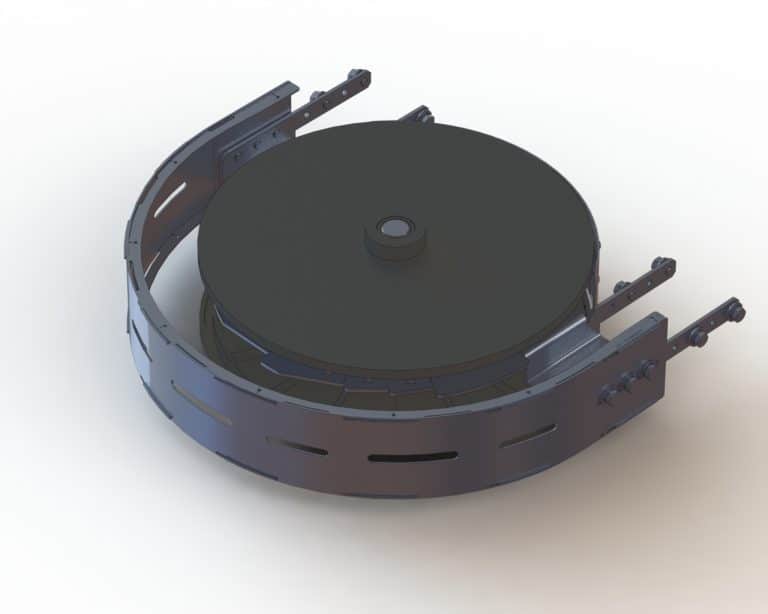
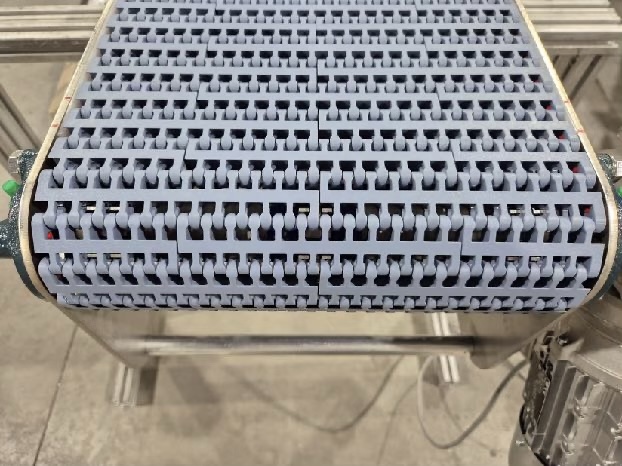
The range covers the full flow. Belt conveyors (EBS) are the most widely used module, suitable for light to medium-duty transport of boxes, parts, packages and polybags. Curve belt conveyors handle direction changes in 30, 45, 90 and 180 degree turns. Roller conveyors (RCB) separate and transport boxes and totes without contact, driven or by gravity. Chain conveyors (EMBS, ETS, EMCS) move large and bulky products and can run horizontally and vertically to join machines or bridge distance. Pallet and wedge conveyors extend the range to heavier loads, and transfer units and diverters route products between lines for sorting, packing and picking.
Full specifications for each module live on the product pages, and the configurator below turns those modules into a real conveyor in minutes. What follows here is the part that decides whether a project works: not which belt, but whether the solution is built to repeat.
A large share of conveyor needs are met by standard modules, configured quickly and produced efficiently. But Easy Conveyors is not limited to standard only, and this is the point machine builders and integrators most often miss.
Many strong projects start from a standard base and need adaptation: different widths, different lengths, special side guides, adapted belts or chains, modified supports, or multiple identical modules built as a series. A standard conveyor with double side guides, a strengthened shaft for heavier loads, or a single sub-frame holding several modules is still a fast, repeatable solution, just tuned to the application.
The deciding question is simple. Does the engineering effort make sense compared with the volume, the repeatability and the long-term value? When it does, an adapted variant is exactly the kind of work Easy Conveyors is built for. Engineer it once, then deliver it again and again.
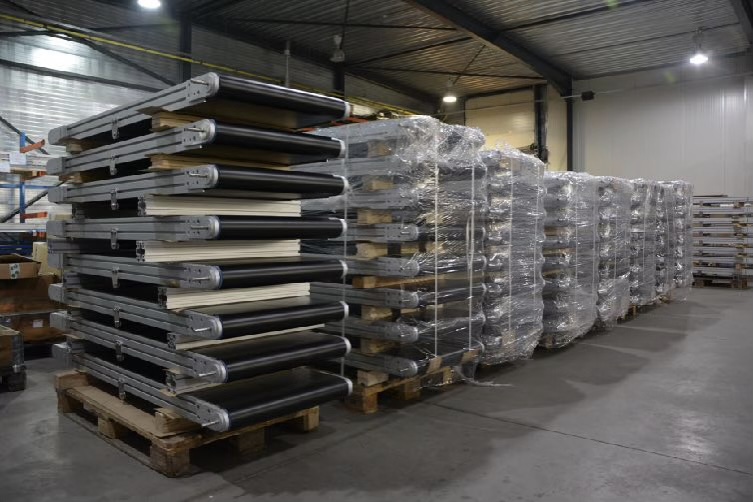
This is why conveyor projects succeed when they are designed for repeatability. A module engineered as a series is quoted faster, because the specification already exists. It carries far less engineering effort per order, because the hard thinking was done once. And it deploys internationally with ease, because a proven drawing can be manufactured and shipped without reinventing the solution for every site. A one-off special carries the opposite on every count: slow quoting, heavy engineering, high error risk and a cost that rarely matches the return. The projects that scale cleanly to ten sites or ten countries are almost always the ones that were designed to repeat from the start.
Machine builders
Machine builders need conveyor modules as part of their own equipment, where the conveyor is one critical component of a larger machine. The value is in reliable, repeatable modules built to clear specifications and adapted where needed, especially when the same module is required across multiple machines, projects or international sites. Instead of engineering every conveyor from scratch, a machine builder gets a practical module that can be produced in series and dropped into the next build, and the one after that.
System integrators
Integrators often own the full project but need a reliable conveyor partner for specific modules, lines or transport sections such as sorting lines, packing lines, e-commerce flows, production lines and machine-to-machine connections. For integrators, speed, clarity and reliability matter most. The conveyor has to drop into the project without adding complexity.
Industrial and production companies
Production and logistics companies usually start from a practical question: how do we move products more efficiently through the facility? That can mean connecting two machines, reducing manual handling, covering a longer distance, feeding a packing or assembly station, or adding several similar conveyors for a repeatable process. In many cases a standard or adapted module solves it without turning the request into a large automation program.
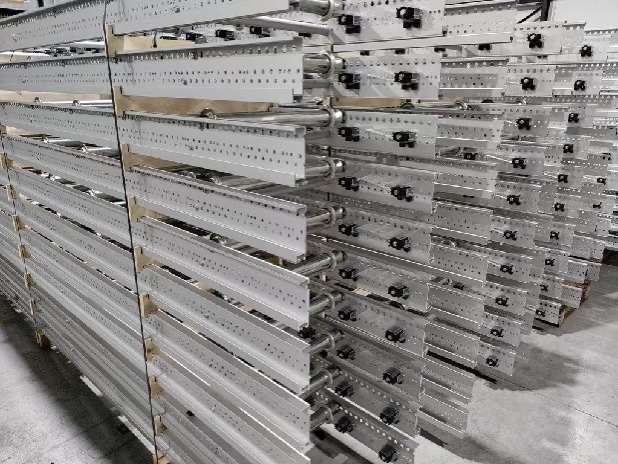
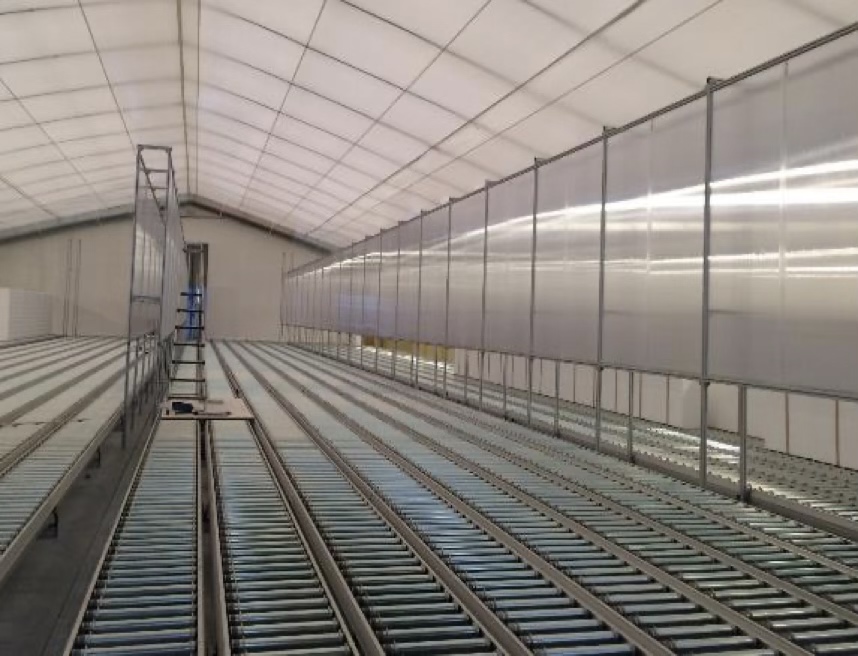
The clearest evidence that a conveyor solution is repeatable and exportable is a track record of repeated, exported deliveries. Easy Conveyors modules are already running in installations across the United States, Canada, Norway, Spain, Germany and the UAE, alongside the Benelux home market. These are real projects, and all figures below are to be confirmed before publication.
For Green Productions, Easy Conveyors supplied adapted chain conveyor modules as approximately modules of 12m over a two-year period, for installations in the USA, Germany and the UAE. It is a textbook case of engineering a module once and delivering it as a series across multiple countries.
For ISO-Group, the company delivered EBS belt conveyors, a single repeatable specification produced at volume for a machine builder.
For KP Conveyors, Easy Conveyors supplied more than metres of roller conveyors with flanged rollers and 400V belt drive (one drive every 18m), shipped as modules across Scandinavian installations, with the most recent project filling trucks to Norway.
For Valvan, the company delivered EBS80 belt conveyors and curve belt conveyors used across plants in Canada and the USA.
For Elego in Spain, Easy Conveyors supplied an RCB roller conveyor project with transfers, delivered as modules and installed locally by the customer.
For ABB and Amazon, Easy Conveyors produced roller conveyor modules with special construction, special width and section length, and Conveylinx modules, delivered as repeatable units across dozens of installations in Europe.
The common thread runs through every one of these. Standard or adapted modules, clear drawings, limited per-project engineering, and delivery as modules that travel well. That is the profile of an ideal Easy Conveyors project.
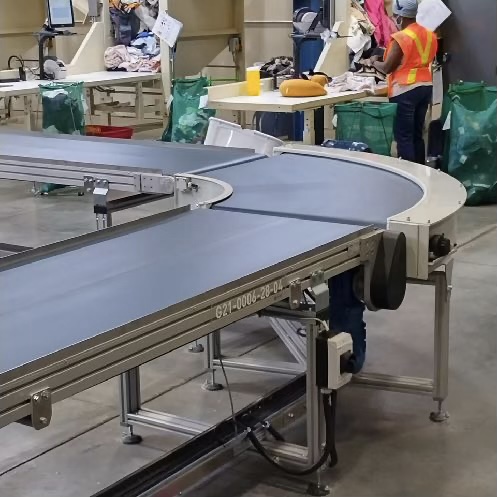
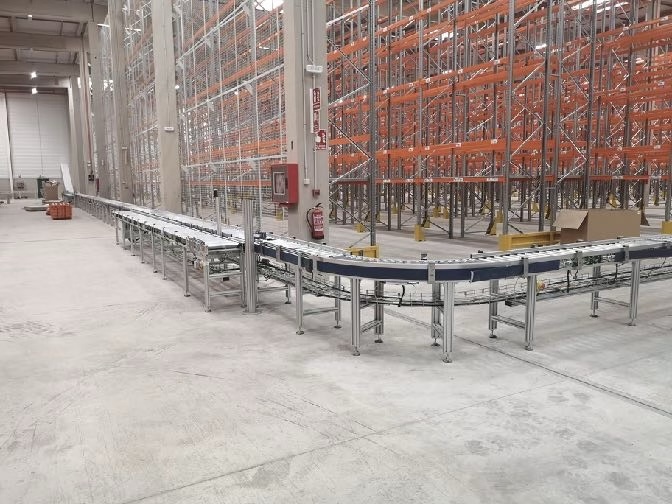
One recent enquiry arrived through the Easy Conveyors website looking for roughly 500 metres of conveyor. On the surface it was a transport question: long runs, the right belt, clear lengths. As the conversation developed, the real need turned out to be far broader, involving sorting, flow design and wider logistics integration. What entered as a conveyor request became a major automation project.
That is the pattern worth understanding. A request often starts simply, and then the real scope appears: sorting, scanning, weighing, PLC control, software integration, lifts, robotics, packing stations, or connection with existing machines. At that point it is no longer a question about conveyor modules. It has become an automation and integration project.
This is exactly why Easy Conveyors works as both a conveyor specialist and a gateway to larger opportunities. When a request grows beyond modules, it connects with the Easy Systems team, which handles conveyor-based automation projects where mechanical design, software, controls and integration have to work together. The takeaway for a visitor is simple and reassuring. Start with the conveyor question. If the project turns out to be bigger, there is a clear next step rather than a dead end.
Not every conveyor project is handled the same way, and being honest about that protects the outcome.
Some modules are ideal for international delivery, specifically when the solution is standard, repeatable and based on clear technical drawings. Easy Conveyors modules are designed to travel. Many are engineered once, manufactured in Belgium and deployed across multiple countries through machine builders, integrators and local partners. Multiple identical modules, exportable transport sections and clearly specified units all move well, as the Green Productions, ISO-Group, KP Conveyors and Valvan projects show. A drawing made once becomes a series shipped abroad.
Other projects need local involvement: complex installation, on-site measurement, integration with existing machines, installation at height, cold-store or cleanroom conditions, or high engineering uncertainty. For those, local presence or a trusted local partner is essential, and Easy Conveyors works with partners in other countries so a customer abroad can still be served correctly. The aim is not only to deliver conveyor technology, but to make sure it can be installed, supported and used reliably in the real environment.
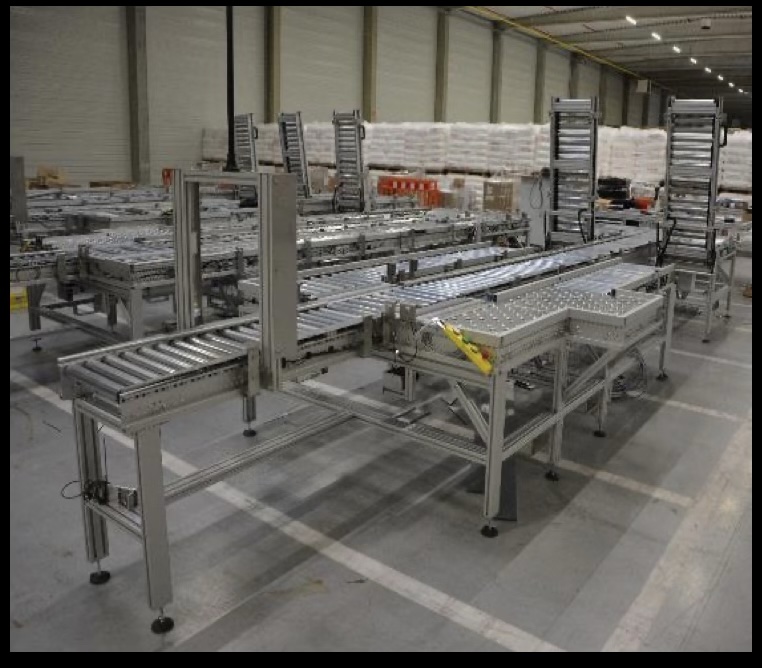
The right conveyor starts with the right questions. Clarifying these early prevents overengineering, delay and unnecessary cost.
First, what needs to be transported? Boxes, totes, pallets, parts, bags and irregular products each suit different conveyor technology. Second, what are the dimensions and weight? Size and load drive the choice of conveyor type, drive, belt or rollers, side guides and support structure. Third, what distance has to be covered? A short link between two machines is a different problem from a long transport line across a warehouse. Fourth, does the product change direction? Curves, transfers, diverters and multiple exits should be planned early. Fifth, is this a one-off or a repeatable solution? For machine builders and integrators, repeatability is usually the key to efficiency. Sixth, is the environment standard or specific? Cleanrooms, food production, cold storage and dusty sites need extra technical attention. Seventh, is only the mechanical conveyor needed, or also controls and integration? A standalone module is a very different scope from a full automation project.
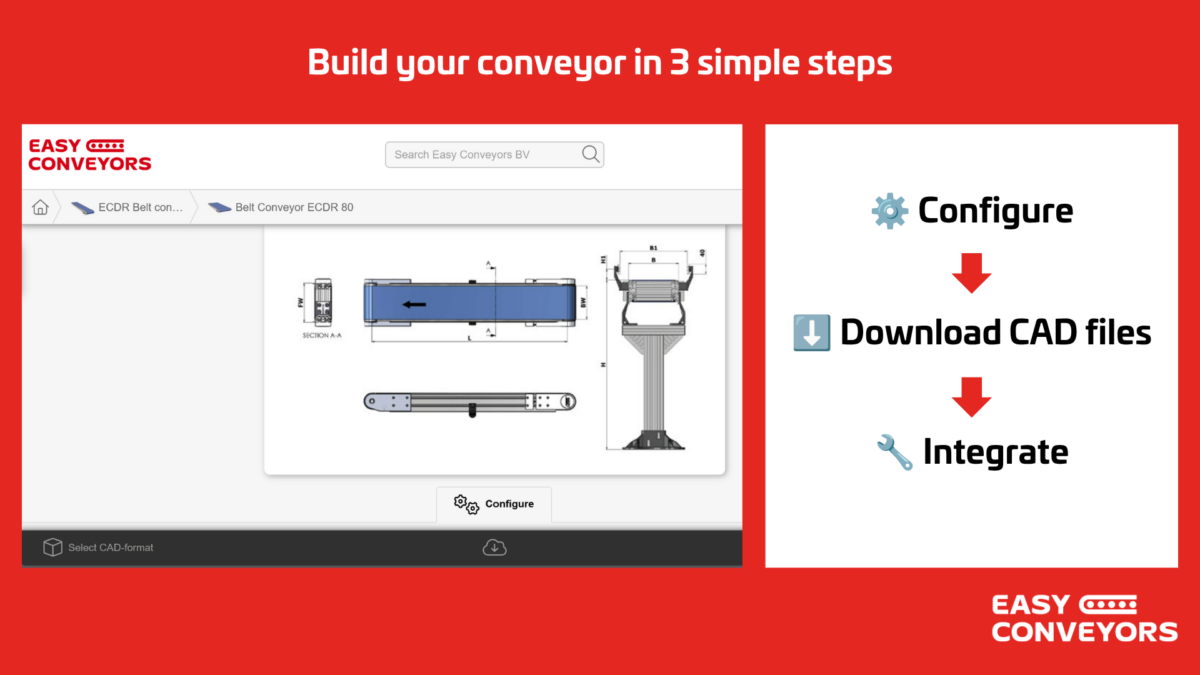
For many standard conveyor needs, the fastest starting point is the Easy Conveyors online configurator, and it is one of the clearest advantages the company offers engineers. The workflow is short. You configure your conveyor by answering a few simple questions. The tool shows the relevant product range and generates the conveyor. You download the file in your chosen CAD format. Then you integrate it straight into your own machine design.
That last step is the one that matters. The conveyor drops into your drawing package as part of your design, not as a separate procurement task handled weeks later. A team that already knows the conveyor type it needs moves from idea to technical specification in minutes, then repeats that specification across every machine and every site that needs it. For a machine builder running the same module across multiple builds or multiple countries, this is what turns a repeatable conveyor into a genuinely repeatable workflow.
A conveyor module can look simple. In the right place it solves a real operational problem: it cuts manual handling, improves ergonomics, connects machines and makes a production or logistics flow predictable. And when the need grows, that same module can be the starting point for a larger automation project.
That is the logic behind Easy Conveyors. Standard where possible, adapted where useful, and connected to deeper automation when a project calls for it. Whether you need one module, a series of adapted conveyors for machines across several countries, or a repeatable solution for a growing operation, the path starts with a clear conveyor question and a partner that has answered it many times before.
Need a standard module, an adapted variant, or a repeatable conveyor solution for your machines, production line or logistics flow? Start with the configurator or send your technical drawing, and Easy Conveyors will help you move in the right direction. If the project turns out to need more than conveyor modules, the Easy Systems team can assess the larger automation step.